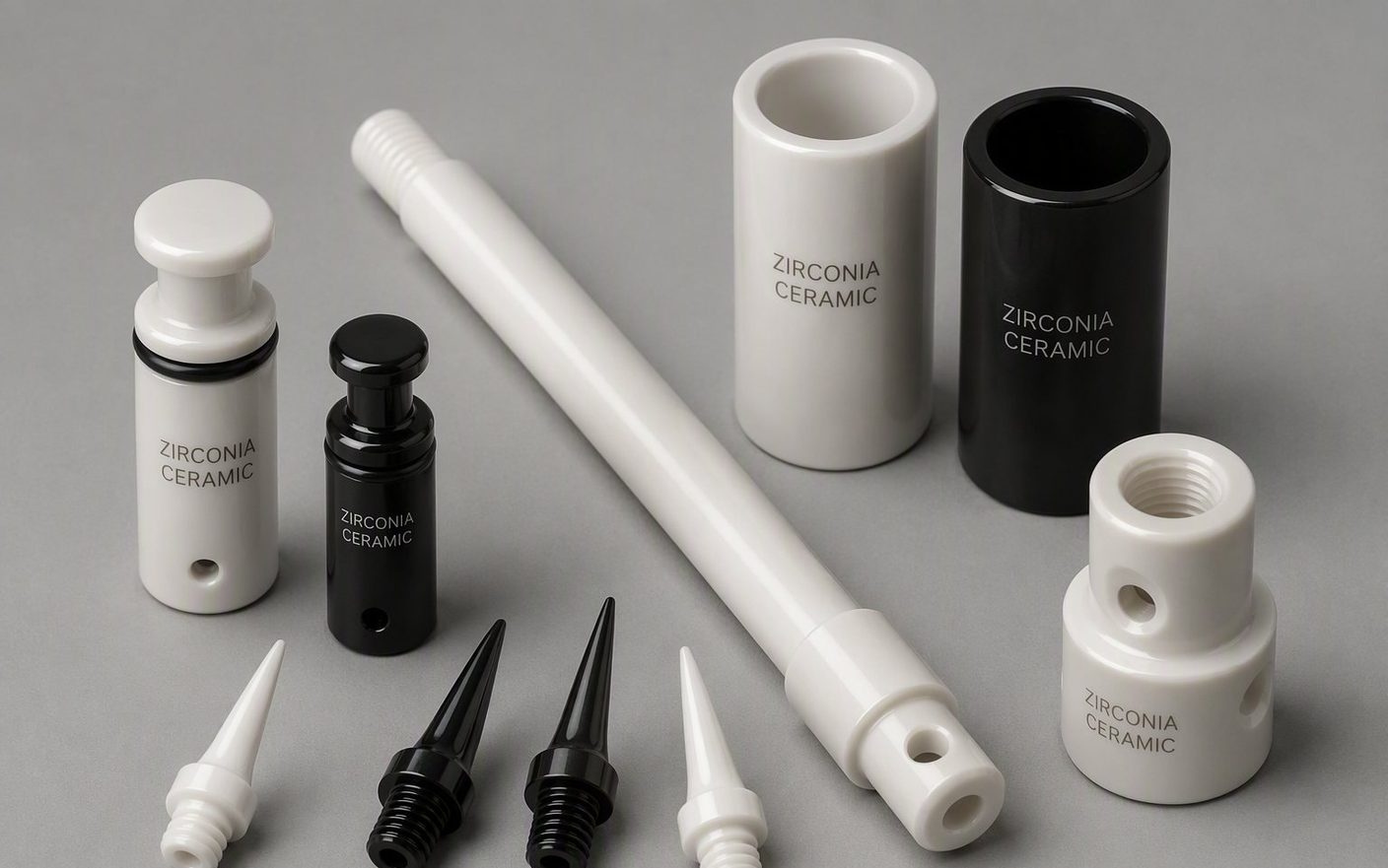
Zirconia (ZrO2) and alumina (Al2O3) cover the majority of structural ceramic applications. Buyers often default to alumina because it is cheaper and better known — then discover the hard way that toughness, not hardness, decides wear-part life. Here is how we advise customers to choose.
1. Strength and toughness: zirconia wins
Y-TZP zirconia delivers 1000–1200 MPa flexural strength with a fracture toughness of 8–10 MPa·m½ — roughly three times alumina's. In practice: plungers that chip at the edge, valve sleeves that crack on installation, and guides that snap under side load are almost always candidates for switching to zirconia.
2. Temperature and insulation: alumina wins
Above roughly 1000°C zirconia's phase stability becomes a concern, while 99%+ alumina runs happily to 1600°C+. Alumina is also the better electrical insulator, with volume resistivity up to 10¹⁴ Ω·cm, and it costs significantly less at volume.
3. Wear mechanism decides the material
Hardness resists abrasion; toughness resists fracture. Most failed "wear parts" we see actually failed by fracture.
- Abrasive sliding, low impact → alumina is sufficient and cheaper
- Impact, edge loading, assembly stress → zirconia
- Chemical attack dominates → consider silicon carbide instead
4. Cost reality check
Zirconia powder costs several times more than alumina, and grinding effort is similar. Expect a zirconia part to cost 2–3× the alumina equivalent. That premium is cheap if the part fails in service — and wasteful if it never would have.
Rules of thumb
- Plungers, dispensing tips, valve sleeves → zirconia
- Insulators, substrates, large structural plates → alumina
- Unsure? Send the drawing — we recommend a grade within 48 hours, free.